
What Changes When You Bring Product Packaging In-House
The bottleneck was never the printer. It was the three weeks between deciding a label was wrong and having a corrected one in hand.

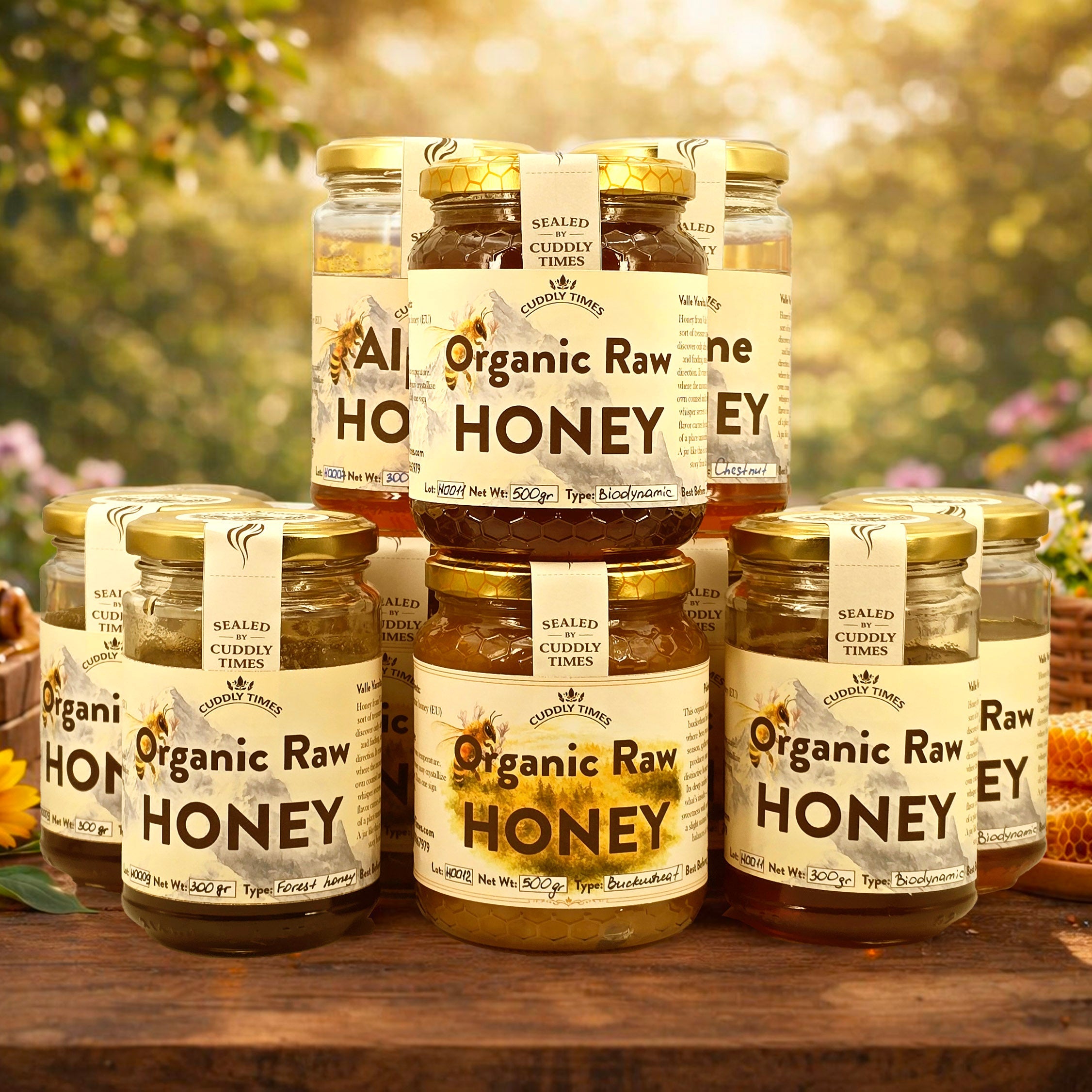
A specialty foods brand we work with — teas, honeys, and coffees, sold direct to consumer — used to outsource its label printing the way most small brands do. Design a label, send it to a print shop, wait for a proof, approve or revise, wait for the run, receive stock. At reasonable volumes and with labels that don’t change often, this works fine.
It stopped working the moment the brand started iterating.
The real cost of an external printer
The sticker price of outsourced printing looks cheap next to buying equipment. What that comparison leaves out is the cost of the loop.
A label rarely gets it right on the first try. A colour looks different printed than it does on screen. A regulatory detail needs adjusting. A new product needs a variant of an existing design under time pressure, because a seasonal harvest came in early or a limited batch sold out faster than expected. Each of these is a small design change. With an external printer, each one is also a two-to-three-week round trip: send the file, wait for a proof, catch what’s wrong, resend, wait for the run.
None of this shows up as a line item. It shows up as a business that can’t move as fast as its own product decisions. A seasonal honey that’s ready to sell sits in unlabelled jars for three weeks. A limited coffee run misses the window it was meant to capture. The constraint isn’t creativity or demand. It’s turnaround time on something that should take an afternoon.
What moved in-house
We brought the labels in-house first, then photography, then the design language that ties them together. The order mattered. Printing without a consistent visual system just produces faster inconsistency. The sequence that worked was: define the brand language precisely enough that a new label can be produced against it without a full creative cycle each time, then get the equipment that lets that definition turn into physical output same-day.
The brand language came first. Typography, colour palette by product line (teas, honeys, coffees each carry a distinct but related visual identity), label geometry, and the rules for how a new product slots into the existing family. This is the piece that’s easy to skip and expensive to skip. Without it, in-house printing just moves the bottleneck from “waiting on an external printer” to “waiting on a designer to make a judgment call every time,” which is faster but still a queue.
The equipment came second, sized to real batch volumes. Not industrial-scale, because the brand’s batches are not industrial scale. A commercial printer suited to the label substrates in use — different for a honey jar than a coffee bag — with a colour-managed workflow so a proof on screen and a label off the printer actually match. Getting colour management right up front avoided the single most common failure mode we’ve seen in in-house print setups: a beautiful label that looks wrong the moment it’s printed, because nobody calibrated the pipeline.
Photography followed the same logic. Once labels could be iterated same-day, product photography needed to keep pace. A new label variant that takes three weeks to photograph properly recreates the same bottleneck one step downstream. The brand built a small, repeatable in-house photography setup — consistent lighting, consistent backdrop, consistent framing — that trades some of the polish of a professional shoot for the ability to turn a new label into a live product photo in the same day it’s printed. For a brand shipping seasonal and limited runs, that trade is correct.
Where Shopify fits
None of this matters if the output doesn’t reach the customer quickly. The brand’s web store runs on Shopify, and the print-photography-listing pipeline was built to feed it directly rather than as three separate workflows that get reconciled periodically.
In practice this means the artwork, the photography, and the product listing share one source of truth. When a label changes, the same asset pipeline that produced the printed label also produces the web image, at the sizes and formats Shopify needs, without a separate export-and-upload step done by hand. It’s a small piece of engineering, not a large one, but it’s the piece that turns “we can print quickly” into “we can go live quickly,” which is the thing that actually matters to a customer browsing the store.
The part that’s easy to underestimate
The equipment and the software integration are the visible parts of this project. The part that mattered more was the discipline of the brand language — deciding, in advance, what a tea label is allowed to look like, what a honey label is allowed to look like, and how a new product fits into that system without a bespoke creative decision every time.
That discipline is what let the speed actually get used. Fast printing without a defined visual system just produces fast mistakes, or fast inconsistency across a product line that’s supposed to look like one brand. The value of bringing production in-house isn’t the equipment. It’s the combination of equipment and a design system disciplined enough that the equipment can be used without a full creative review on every run.
For a brand selling perishable, seasonal, small-batch specialty goods, that combination is what turns packaging from a fixed cost centre into something that moves at the speed the product actually moves.